
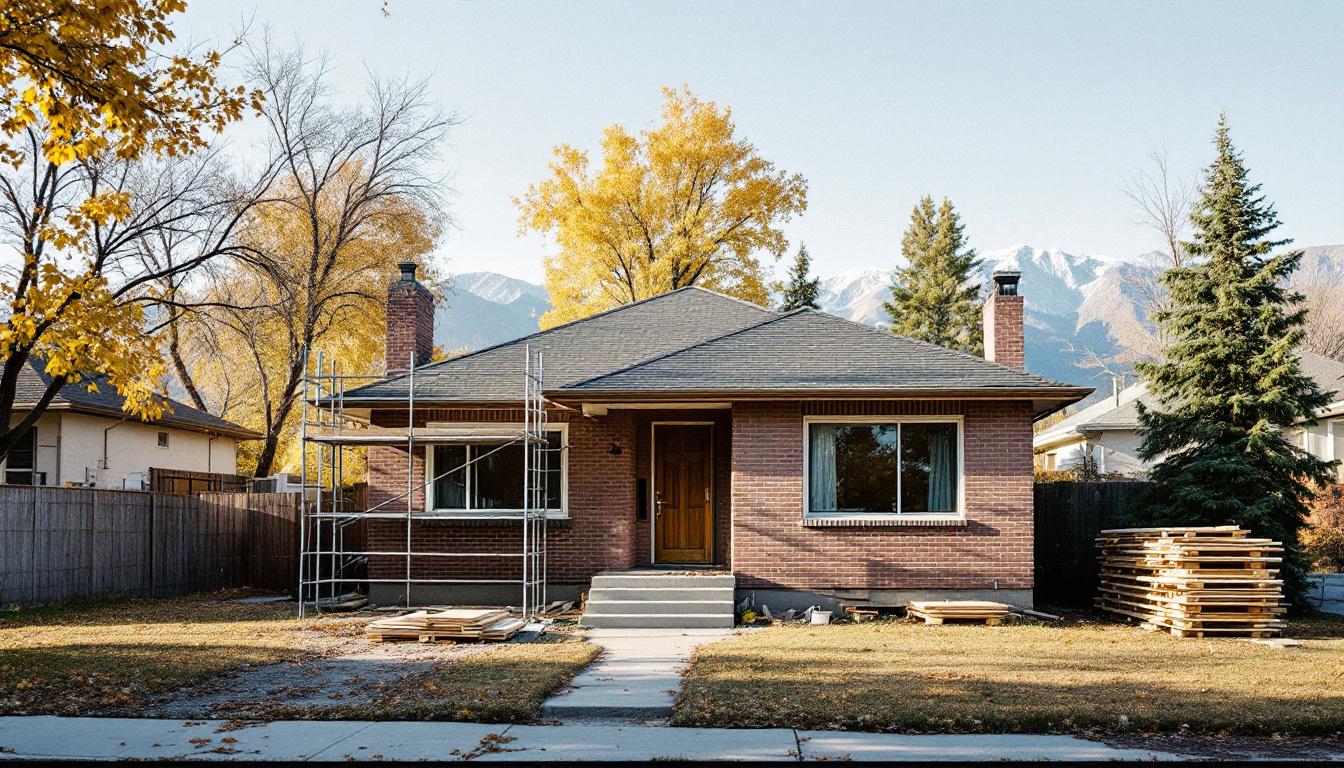
In a tight Utah market, the homes that need work are often the ones you can actually get. Renovation loans let you finance the purchase and the repairs together, based on what the home will be worth after the work is done. The two big options are the FHA 203(k) and Fannie Mae's HomeStyle loan.
The short version
| FHA 203(k) | Fannie Mae HomeStyle | |
|---|---|---|
| Loan type | FHA (government) | Conventional |
| Credit | More flexible | Usually needs stronger credit |
| Property use | Primary residence only | Primary, second home, or 1-unit investment |
| Repair limits | Limited 203(k): up to $75,000 of non-structural work. Standard 203(k): larger and structural projects, $5,000 minimum | Renovation costs up to 75% of the home's as-completed value |
| Luxury items | Not eligible (for example, a new pool) | Allowed if permanently attached to the home |
| Consultant | Required on the Standard 203(k) | Not required |
| Mortgage insurance | FHA premiums, often for the life of the loan | Conventional PMI, removable as equity grows |
The two kinds of 203(k)
Limited 203(k) (it used to be called the Streamline 203(k)) is for non-structural work: roof, furnace, water heater, windows, flooring, paint, and kitchen or bath updates. HUD raised its limit to $75,000 in late 2024, which makes it a fit for a lot more Utah fixer-uppers than before.
Standard 203(k) handles bigger and structural projects, like moving walls, additions, or foundation work. It requires a HUD-approved 203(k) consultant to inspect the home and write up the scope of work.
When FHA 203(k) usually fits
- Your credit score is in the 600s, or your debt-to-income ratio is on the higher side
- You're buying a primary residence
- The work is mostly repairs and updates rather than upgrades like a pool or outdoor kitchen
- You want to pair it with an FHA-based Utah down payment program
Learn more on our FHA 203(k) page.
When HomeStyle usually fits
- Your credit is strong, so conventional pricing and removable PMI work in your favor
- You're buying a second home or a rental
- Your project includes upgrades FHA won't finance, like a pool, a detached garage, or landscaping
- You want flexibility without a 203(k) consultant
Learn more on our HomeStyle renovation page.
How both work in practice
- Get bids first. You'll need a licensed contractor's detailed bid before you can lock in the loan amount.
- Appraisal "as completed." The appraiser values the home as it will be after the work, and that value drives the loan amount.
- Funds go into escrow. Repair money is held at closing and paid to the contractor in stages, as work is finished and inspected.
- Plan for a contingency reserve. Lenders usually build in extra for surprises, which is common in older Utah homes.
- Expect a longer closing. Plan on about 45 to 60 days instead of 30.
Thinking about a fixer-upper?
Bring us the listing and your wish list, and we'll tell you which loan fits, what the as-completed value needs to be, and how much cash you'll need. Book a free call.