
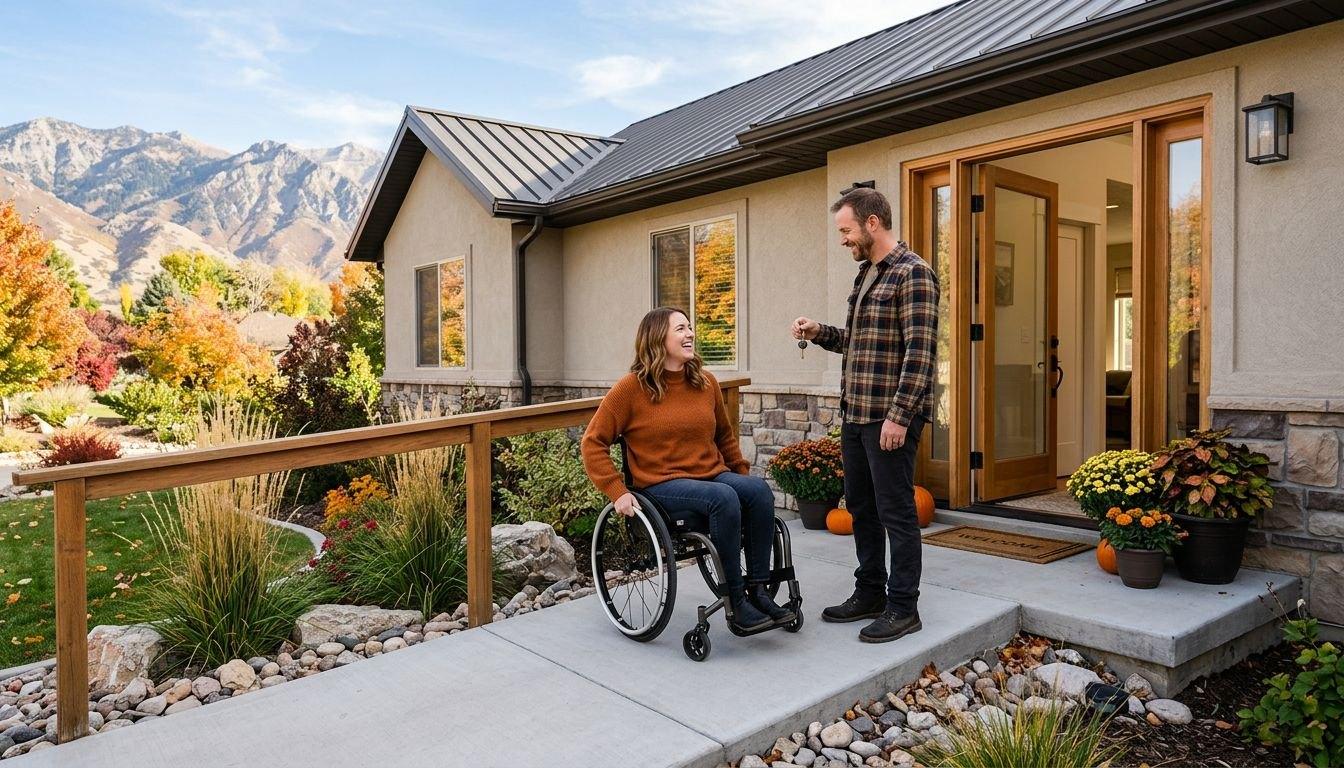
Buying a home with a disability in the household brings extra questions: whether disability income counts, how to pay for accessibility changes, and whether there's any help with affordability. In Utah, there's more help than most people realize.
HomeChoice: up to $70,000 statewide
HomeChoice is a statewide program run by the Neighborhood Nonprofit Housing Corporation (NNHC) and funded through the State of Utah's Olene Walker Housing Loan Fund. It offers a low-interest second mortgage of up to $70,000 that sits behind your main loan and lowers your overall monthly payment.
Who it's for:
- A borrower, or a member of the household, has a disability under the ADA or Fair Housing Act definition
- Household income is within HUD income limits for your county
- You're buying an existing single-family home as your primary residence, anywhere in Utah
- You put in at least $500 of your own funds
Your main mortgage still has to qualify on its own, with a minimum credit score of 640 and a debt-to-income ratio up to 45% on the HomeChoice side. There's no prepayment penalty on the HomeChoice loan.
HomeChoice has funding available as of October 2026, and money goes first-come, first-served. See our HomeChoice guide for the step-by-step process.
Using disability income to qualify
Disability income counts as income for a mortgage. That includes Social Security Disability Insurance (SSDI), Supplemental Security Income (SSI), VA disability compensation, and long-term disability benefits.
What lenders look for:
- An award letter showing the amount
- Continuance, meaning the income is expected to continue. A benefit letter without an end date usually covers this.
- Grossing up. Because many disability benefits aren't taxed, lenders can often adjust that income upward when calculating your debt-to-income ratio. That can make a real difference in your budget.
Paying for accessibility changes
If the right home needs a ramp, wider doorways, a zero-step shower, or grab bars, you don't have to save up separately. A renovation loan can finance those changes as part of the purchase:
- FHA 203(k): the Limited 203(k) covers up to $75,000 of non-structural work. See how the 203(k) process works.
- Fannie Mae HomeStyle: a conventional option for bigger projects. Compare them in our 203(k) vs. HomeStyle guide.
Veterans with certain service-connected disabilities may also qualify for VA adapted housing grants to build or modify a home, and veterans receiving VA disability compensation are exempt from the VA funding fee. See our VA loan page.
Stacking with other Utah programs
HomeChoice lowers the monthly payment, but it doesn't usually cover cash to close. Depending on where you're buying, you may be able to pair it with other assistance. Our November program update lists what's open now.
Talk it through
We'll check HomeChoice eligibility, how your income will be counted, and whether the home you're considering needs a renovation loan. Book a free call, or call us at (801) 820-7620.